
For many candidates in India, especially those exploring a career abroad, Japan has started to stand out, not because it’s easy, but because it’s structured.
Among the various opportunities available, caregiver jobs in Japan have become one of the most accessible and reliable pathways for foreign workers. But before you apply, it’s important to understand what the role involves, what the process looks like, and whether it’s the right fit for you.
This guide will walk you through everything you need to know, without oversimplifying it.
Japan has one of the fastest-aging populations in the world. This has created a consistent demand for caregivers across:
To meet this demand, Japan introduced structured pathways that allow foreign candidates to work legally in these roles.
For candidates, this means:
Before applying, you need clarity on the role itself.
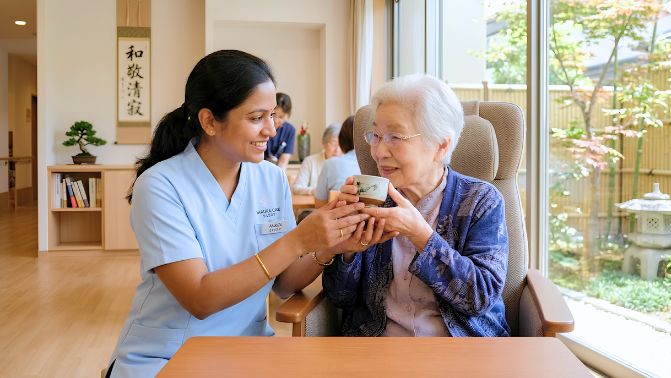
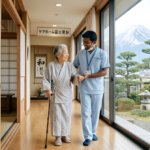
Caregiving in Japan is hands-on and responsibility-driven. It involves:
Depending on the employer, you may work in:
This is not a desk job. It requires patience, consistency, and a willingness to work closely with people.
The eligibility is relatively open, but there are some basic requirements.
You can apply if you:
Candidates with healthcare backgrounds (ANM, GNM, nursing) may find it easier to adapt, but it’s not mandatory.
This is one part you cannot skip.
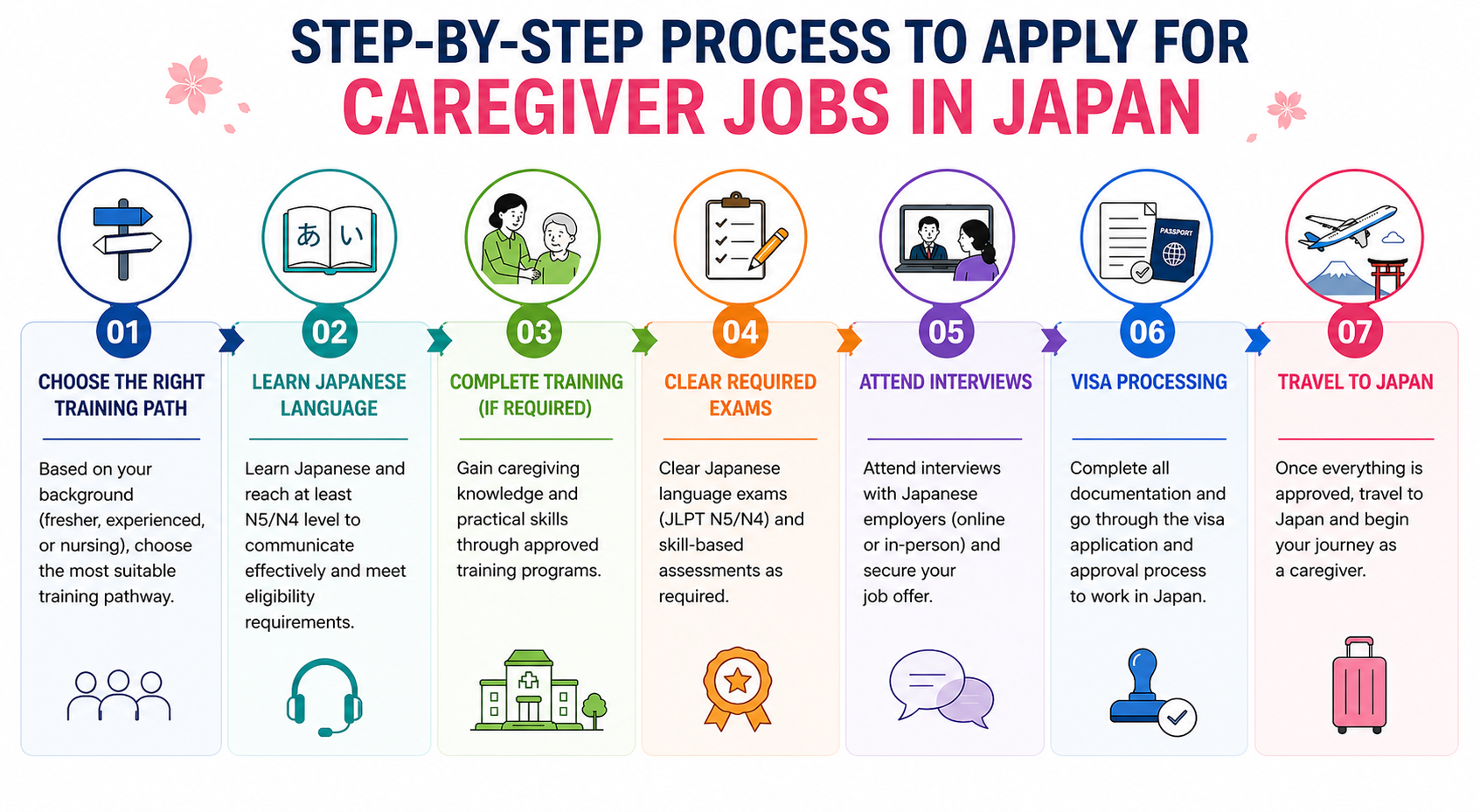
To work in Japan, you’ll need to reach at least: JLPT N5 & N4 level
This is required for:
Candidates who take language seriously early on usually progress faster.
Many employers in Japan also support candidates who want to continue learning Japanese after starting work.
For example, if you aim to reach JLPT N3 level or higher, some employers may:
This helps candidates improve:
Caregivers in Japan typically earn:
👉 ¥160,000 to ¥220,000 per month
In addition, you may receive:
Expenses are relatively controlled, especially if accommodation is subsidized, allowing candidates to save consistently.
Caregivers are placed in licensed and professional facilities, not private homes.
These include:
Work is usually shift-based, with defined schedules and structured systems.
It’s important to be realistic.
Some common challenges include:
Candidates who are mentally prepared tend to adjust much better.
This depends on your mindset.
This path is suitable if you:
It may not be the right fit if you’re looking for:
Caregiver jobs in Japan are not a shortcut, they’re a structured pathway.
That’s what makes them reliable.
If you approach the process with clarity, preparation, and consistency, it can open the door to:
But like any meaningful opportunity, it requires the right approach from the beginning.
Caregiver jobs in Japan involve supporting individuals in daily activities such as mobility, hygiene, meals, and overall well-being. These roles are typically in elderly care, disability care, or childcare facilities.
Anyone with at least 12th pass education, good health, and willingness to learn Japanese can apply. Prior healthcare experience is helpful but not mandatory.
Yes, Japanese language proficiency is required. Most candidates need to reach at least JLPT N5 or N4 level to qualify and communicate effectively.
Caregivers typically earn between ¥160,000 to ¥220,000 per month, with additional earnings through overtime and allowances.



We at Genrise believe in utmost integrity and transparency in all our process in order to ensure the best in class experience for candidates seeking an opportunity abroad.
Copyright © 2026. | Genrise Global Staffing Limited Pvt. Ltd.
Developed By: EYB Digitech</span