

One of the biggest questions candidates have before moving to Japan isn’t about work.
It’s much simpler.
“Where will I live?”
Many people imagine tiny rooms with barely enough space to sleep. Others expect shared dormitories with no privacy.
The reality is usually much more practical.
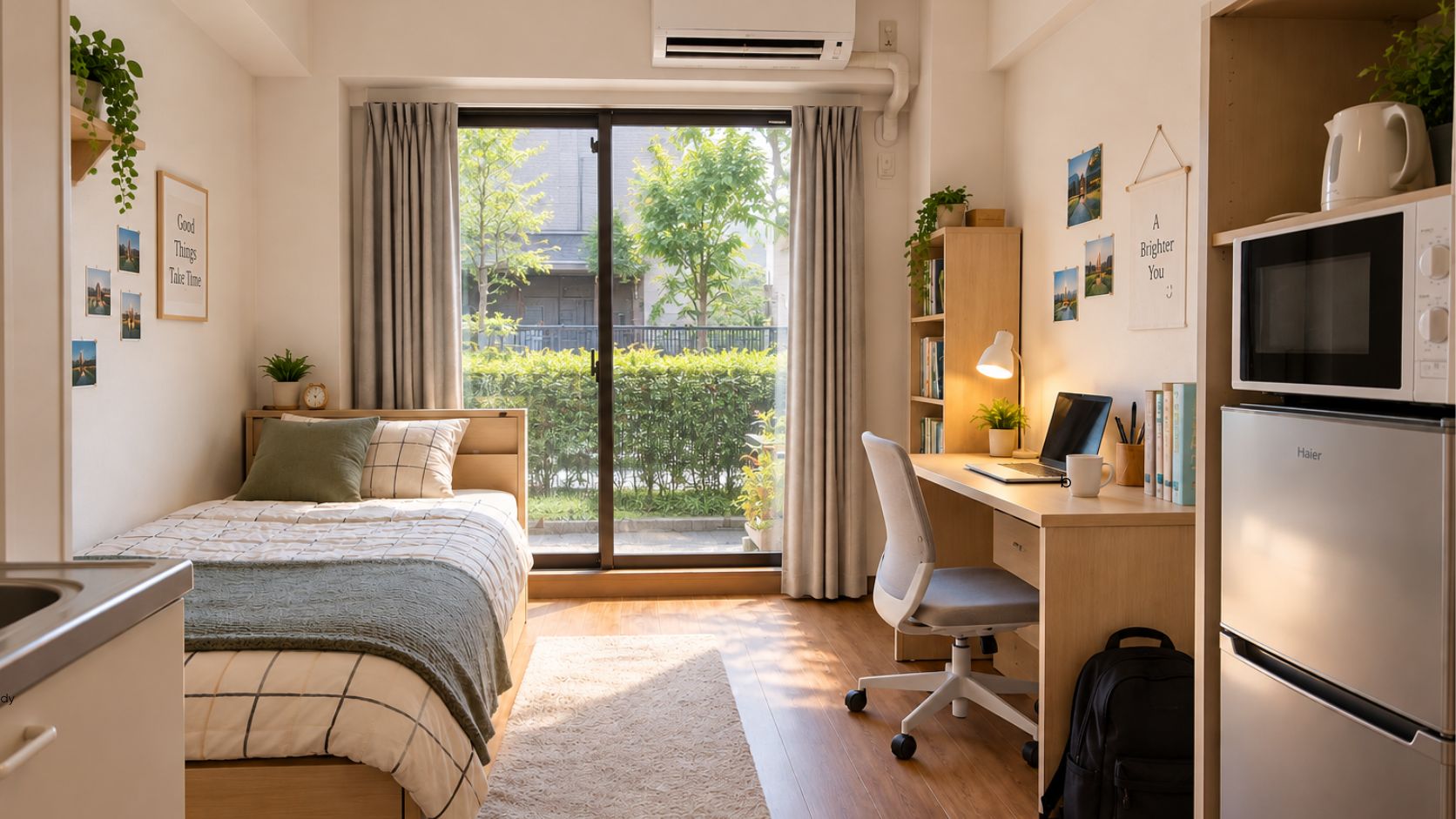
While accommodation varies depending on the employer and city, most SSW candidates find that their room is comfortable, functional, and designed for everyday living.
Here’s what you can realistically expect.
Japanese rooms are generally smaller than what many people are used to in India.
But every part of the room has a purpose.
Instead of large empty spaces, you’ll find smart layouts that make even a small room feel comfortable.
Within a few weeks, most candidates realize they don’t actually need a very large room for daily life.
Many employers provide single-occupancy accommodation, especially for SSW caregivers.
Depending on the employer, you may have:
Some accommodations may have shared kitchens or laundry areas, while others are fully private.
Japanese homes are known for being neat and clutter-free.
Rooms are usually furnished with only the essentials.
Instead of filling every corner with furniture, the focus is on keeping the space organized and easy to maintain.
Many international workers begin appreciating this minimalist lifestyle after settling in.
Even though rooms are compact, they often include clever storage solutions.
You’ll find built-in cupboards, shelves, or under-bed storage that help keep your belongings organized without taking up extra space.
This makes the room feel larger than its actual size.
Whether the accommodation is private or shared, cleanliness is everyone’s responsibility.
You’ll be expected to:
These habits quickly become part of everyday life in Japan.
Many candidates arrive with large suitcases filled with things they think they’ll need.
A few months later, they realize they use only a small portion of what they brought.
Japan’s convenience stores, supermarkets, and online shopping make it easy to buy everyday essentials whenever needed.
Many people naturally adopt a simpler lifestyle.
One thing candidates appreciate is that accommodation is often located close to the workplace or well-connected by public transport.
This means:
A smaller room with a convenient location often provides a better quality of life than a larger room far from work.
During the first few days, the room may feel unfamiliar.
But as you settle into your routine, add a few personal touches, and become comfortable with your surroundings, it gradually becomes your own space.
For many candidates, it’s the place where they rest after work, stay connected with family back home, and begin building a new chapter of their lives.
Your room in Japan may not be large, but it’s designed for comfort, functionality, and efficient living.
Most candidates quickly discover that what matters isn’t the size of the room, it’s the quality of life around it.
A safe neighborhood, reliable transport, organized surroundings, and a comfortable personal space often make everyday living much easier than expected.
Sometimes, living better isn’t about having more space.
It’s about having everything you need within it.
Yes. Many employers help arrange accommodation, although the type of housing may vary depending on the employer and location.
In many cases, SSW caregivers are provided with a private room. However, facilities such as kitchens or laundry areas may sometimes be shared.
Rooms are generally smaller than typical Indian homes, but they are efficiently designed and equipped with essential amenities.
Many employer-arranged accommodations include basic furniture such as a bed, wardrobe, table, and essential appliances, though this can vary.
Yes. Most candidates add small personal items such as photographs, plants, or decorations to make the space feel more like home.

We at Genrise believe in utmost integrity and transparency in all our process in order to ensure the best in class experience for candidates seeking an opportunity abroad.
Copyright © 2026. | Genrise Global Staffing Limited Pvt. Ltd.
Developed By: EYB Digitech</span