

When people think about moving to Japan, they usually focus on the language, work culture, or adapting to a new country.
But once they arrive, many candidates are surprised by something else.
Daily life is often much easier than they expected.
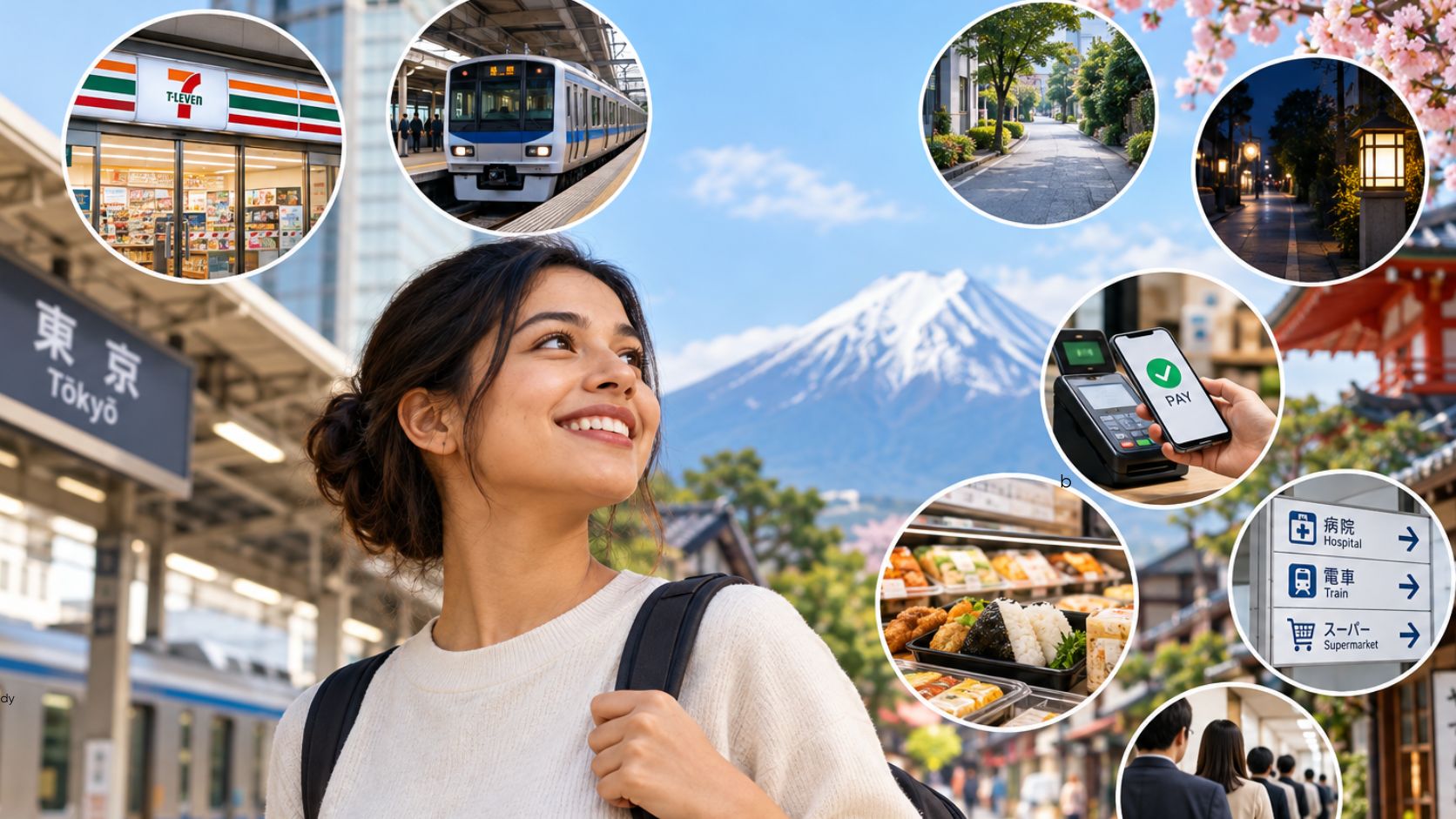
From transportation to convenience stores, Japan has built systems that make everyday living smooth, efficient, and stress-free.
If you’re planning to move to Japan through the SSW Caregiver Program, here are eight everyday things that you’ll quickly start appreciating.
In Japan, convenience stores (called konbini) are much more than places to buy snacks.
You can:
Most are open 24/7, making them incredibly useful, especially during your first few months.
One of the first things newcomers notice is how reliable public transport is.
Trains and buses follow schedules with remarkable accuracy.
You can confidently plan your day because delays are uncommon, making commuting to work much less stressful.
For shift-based caregivers, this reliability becomes a huge advantage.
This surprises almost everyone.
Japan has very few public bins, yet the streets remain exceptionally clean.
People simply carry their waste until they find a suitable place to dispose of it.
It creates a cleaner environment and encourages everyone to take responsibility for public spaces.
Many people living in Japan say they feel comfortable walking home at night or using public transport alone.
Lost items are often handed in, and public places are generally well-maintained and orderly.
While basic precautions are always important anywhere in the world, Japan is widely known for its strong sense of public safety.
Although cash is still accepted, digital payments have become incredibly convenient.
From supermarkets and vending machines to restaurants and pharmacies, paying with a card or mobile app is quick and hassle-free.
Everyday purchases take just a few seconds.
Need to visit a hospital?
Catch a train?
Buy groceries?
Almost everything is supported by clear signs, organized layouts, and easy-to-follow systems.
Even if your Japanese isn’t perfect, you’ll often find that navigating daily life is easier than expected.
Not everyone has time to cook after work.
Fortunately, convenience stores and supermarkets offer fresh, hygienic, ready-to-eat meals at reasonable prices.
Whether it’s breakfast before a shift or dinner after work, you’ll always find healthy and affordable options.
This is especially helpful during your first few months while you’re settling in.
Japan places great importance on respecting other people’s space.
Queues are orderly.
Public transport is calm.
People avoid unnecessary noise.
Whether you’re commuting or shopping, this creates a peaceful environment that many international workers come to appreciate.
It’s one of those small things that quietly improves your everyday experience.
Moving abroad naturally comes with challenges.
But many candidates discover that Japan’s well-organized systems actually reduce the stress of daily life.
When transportation is reliable, public spaces are clean, and everyday services work efficiently, it’s easier to focus on what matters most, learning, working, and building your career.
Yes. Reliable public transport, organized systems, convenience stores, and safe neighborhoods make everyday life easier for many foreign workers.
Yes. They offer much more than food, including bill payments, parcel services, ATM access, printing, and travel-related services.
Japan’s trains and buses are known for their punctuality and efficiency, making commuting simple and predictable.
Japan is widely regarded as one of the safest countries in the world, though it’s always important to follow normal safety precautions.
Well-organized public services, efficient infrastructure, and a culture that values cleanliness and order help make the transition smoother for many newcomers.

We at Genrise believe in utmost integrity and transparency in all our process in order to ensure the best in class experience for candidates seeking an opportunity abroad.
Copyright © 2026. | Genrise Global Staffing Limited Pvt. Ltd.
Developed By: EYB Digitech</span