
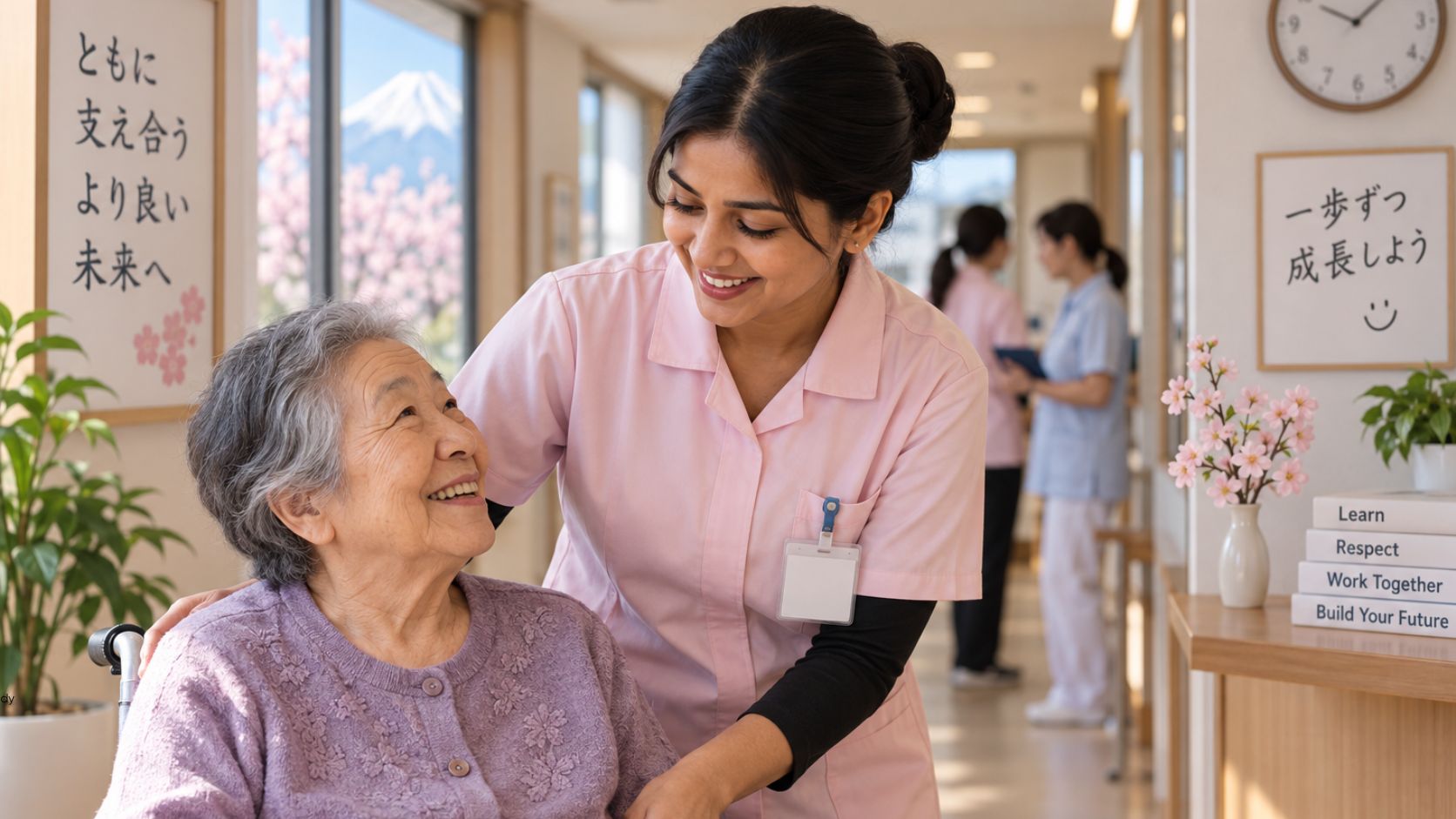
When most candidates imagine working as a caregiver in Japan, they picture helping elderly residents with their daily needs.
While that’s true, Japanese care homes are much more than places that provide assistance.
They are highly organized environments built around one core principle:
Helping residents live with dignity, independence, and respect.
Understanding how these facilities operate can help SSW candidates prepare for what life and work in Japan are really like.
Let’s take a closer look behind the scenes.
One of the biggest misconceptions is that caregivers spend their day doing everything for residents.
In reality, Japanese care homes encourage residents to remain as independent as possible.
Instead of completing every task for them, caregivers often support residents in doing things themselves whenever it’s safe to do so.
For example:
The goal is to maintain the resident’s confidence and quality of life.
Japanese care homes operate with carefully planned schedules.
A typical day includes:
Following these routines ensures every resident receives consistent, high-quality care.
Caregiving in Japan is never a one-person job.
A typical care home includes:
Everyone works together, sharing updates and coordinating care for each resident.
As an SSW caregiver, communication with your team becomes just as important as caring for residents.
Many candidates are surprised by how much documentation is involved.
After assisting a resident, caregivers often record:
These records help ensure continuity of care between shifts and allow healthcare teams to respond quickly if a resident’s condition changes.
In Japan, good documentation is considered good caregiving.
Unlike environments where speed is prioritized, Japanese care homes focus on safety.
Before helping a resident move, caregivers are trained to:
Taking a little extra time is encouraged if it prevents injuries or discomfort.
One of the most noticeable differences in Japanese caregiving is the emphasis on respect.
Caregivers are expected to:
Care isn’t limited to physical support, it also includes building trust and maintaining dignity.
Many modern care homes use technology such as:
These tools help improve safety and reduce physical strain for caregivers.
However, technology does not replace human interaction.
Compassion, communication, and empathy remain at the heart of caregiving.
Japanese employers encourage caregivers to keep improving.
Many candidates continue learning:
Learning doesn’t stop after joining, it becomes part of your career journey.
Many candidates believe they’re applying for a caregiving job.
In reality, they’re entering a professional healthcare environment where:
The more prepared you are for these expectations, the smoother your transition into Japanese caregiving will be.
Japanese care homes are designed around more than just daily assistance.
They focus on helping residents live safely, comfortably, and with dignity through structured systems, teamwork, and compassionate care.
For SSW candidates, understanding how these facilities operate before arriving in Japan can make adaptation easier and build confidence from day one.
The more you understand the environment you’ll be working in, the better prepared you’ll be to build a successful caregiving career in Japan.
SSW caregivers assist elderly residents with daily activities, support their independence, monitor their well-being, and work as part of a multidisciplinary care team.
Yes. Many facilities use electronic records, monitoring systems, transfer equipment, and other technologies to improve safety and quality of care.
Absolutely. Caregivers are expected to record observations, care provided, and any changes in a resident’s condition to ensure continuity of care.
No. Caregivers collaborate closely with nurses, therapists, supervisors, and other staff members to provide coordinated care.
Beyond technical skills, employers value reliability, respect, teamwork, attention to detail, and a commitment to continuous learning.

We at Genrise believe in utmost integrity and transparency in all our process in order to ensure the best in class experience for candidates seeking an opportunity abroad.
Copyright © 2026. | Genrise Global Staffing Limited Pvt. Ltd.
Developed By: EYB Digitech</span