

If you’ve been exploring jobs in Japan, you’ve probably come across the term SSW Visa. It’s one of the most practical and structured pathways for Indian candidates, especially those interested in caregiving and other in-demand sectors.
But what exactly is it? Who can apply? And how do you actually get there?
Here’s a clear, no-nonsense breakdown.
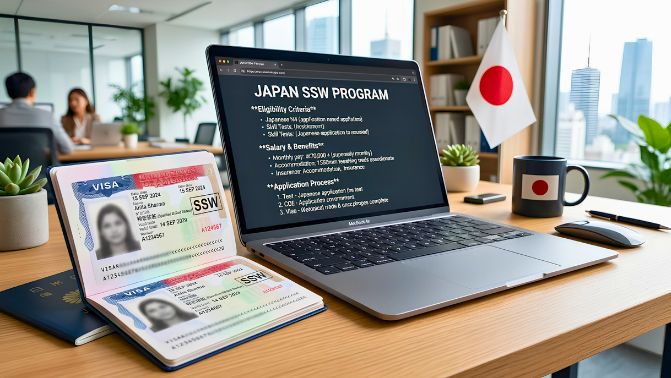
The Specified Skilled Worker (SSW) visa is a work visa introduced by the Japanese government to address labor shortages across key industries.
Instead of temporary or unclear job routes, this visa offers:
Some of the major sectors include:
For Genrise candidates, the most relevant pathway is international caregiving, which has consistent demand and a defined process.
You can explore more about this pathway here
Earlier, working in Japan was complicated for foreign candidates. The SSW visa simplified this.
Now, instead of relying on unclear routes, candidates can follow a step-by-step process that includes:
It’s not instant, but it’s reliable.
The requirements are straightforward, but they do require commitment.
To apply, you generally need:
If you’re unsure about eligibility, this guide can help.
One of the biggest questions: “How much will I earn?”
For caregiving roles, the typical salary range is:
¥160,000 to ¥220,000 per month
(Approx. ₹90,000 to ₹1,25,000)
In addition, you may earn:
Over time, your salary can grow with:
Role upgrades
This is where most candidates need clarity. The process isn’t complicated, but it has to be followed properly.
Your starting point depends on your background:
You’ll need to reach JLPT N4 level.
This isn’t just for exams—it’s required for:
You’ll need to pass:
This confirms you’re ready for the job.
Once qualified, you’ll be matched with employers in Japan.
Interviews usually focus on:
After clearing of exams & selection
Once everything is complete, you begin your job in Japan as a caregiver under the SSW visa.
Why are so many candidates choosing this pathway?
This isn’t a shortcut to going abroad.
You will need to:
But unlike many other pathways, this one is clear and predictable, you know what you’re working towards.
The SSW visa in Japan has made it possible for candidates from India to build a stable, long-term career abroad, especially in international caregiving.
If you approach it with the right preparation and mindset, it’s not just an opportunity to work abroad, it’s a structured pathway to grow professionally.



The SSW (Specified Skilled Worker) visa is a work visa that allows foreign candidates to work in Japan in sectors facing labor shortages, such as caregiving, hospitality, and manufacturing.
Yes, Japanese language proficiency is mandatory. Most candidates need to achieve JFT or JLPT N5 & N4 level to qualify and work effectively.
The process generally takes 6 to 12 months, including training, language preparation, exams, interviews, and visa processing.
No, the SSW visa is initially temporary but can be renewed based on your job and performance. Some pathways may lead to long-term opportunities.
Yes, freshers can apply. However, they need to undergo proper training and language preparation before qualifying.

We at Genrise believe in utmost integrity and transparency in all our process in order to ensure the best in class experience for candidates seeking an opportunity abroad.
Copyright © 2026. | Genrise Global Staffing Limited Pvt. Ltd.
Developed By: EYB Digitech</span